Fatigue
Table of Contents
Fatigue refers to the game state where the number of cards remaining in each hero’s deck becomes more important than the life totals. If one hero runs out of cards, the other is free to attack with whatever they can (typically a weapon) turn after turn until the game is won.
Fatigue is a game state and archetype of strategies. There are many different strategies that result in victory by fatigue.
Any strategy that seeks to win by fatigue must reach a fatigue state before any hero hits zero life, which usually means leaning towards a defensive stance, prolonging the game.
When striving for fatigue, reducing your opponent’s life total is not necessarily an indicator of progress. To the contrary; it can be an indication that you have spent too many resources on dealing non-disruptive damage that could have been better spent on protecting your own life total. If you die before reaching the second cycle, it doesn’t matter that you hammered your opponent down to a low-ish life total.
Fatigue toolkit
Let’s talk about the tools available for achieving fatigue. A fatigue strategy depends on staying alive while using an appropriate combination of these tools to reduce your opponent’s deck to zero (and keeping cards in your own deck, of course).
Deck damage
Deck damage means removing cards from your opponent’s deck faster than your own. Let’s look at some ways to inflict deck damage.
Deck damage via disruption
If you attack your opponent with Boulder Drop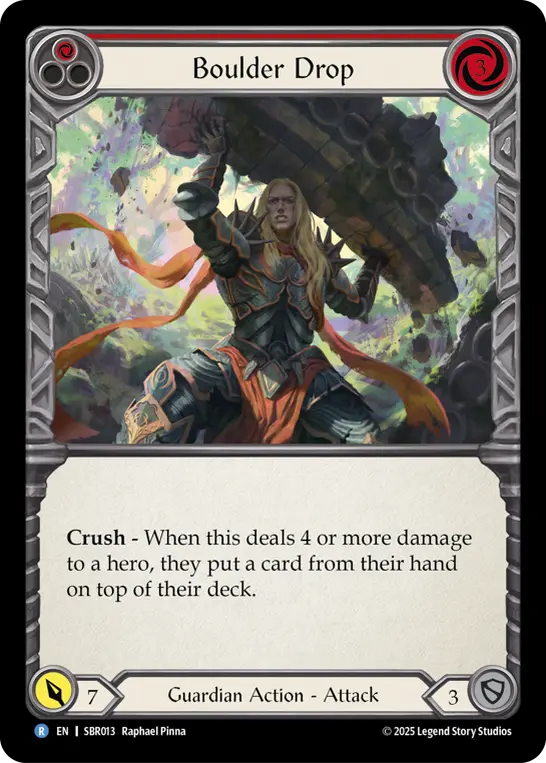 and they defend with two cards to avoid the disruptive effect (which is an efficient play, value-wise), you have spent one card from the deck while taking out two cards from theirs.
Direct deck damage
Some cards have effects that directly remove cards from the opponent’s deck, such as Daily Grind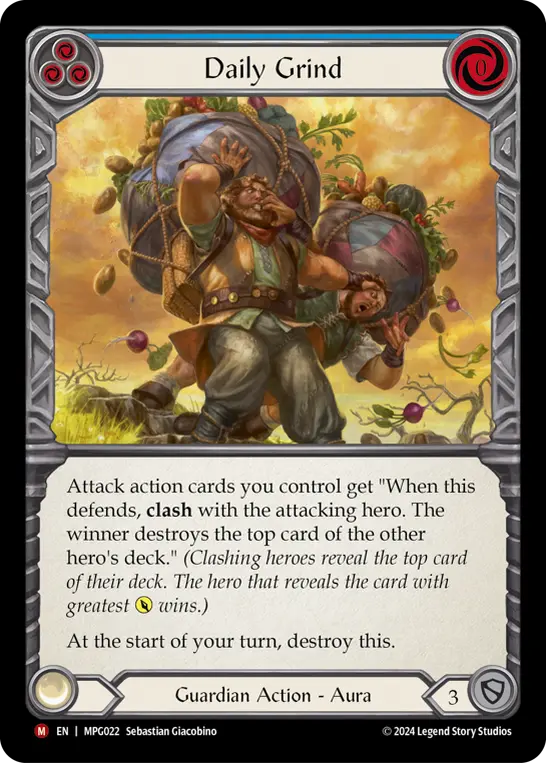 , Righteous Cleansing
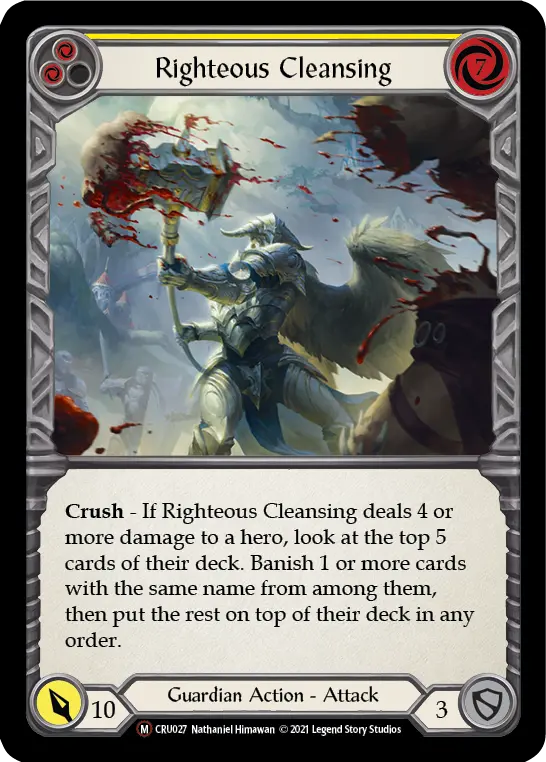 and Put ‘Em in Their Place
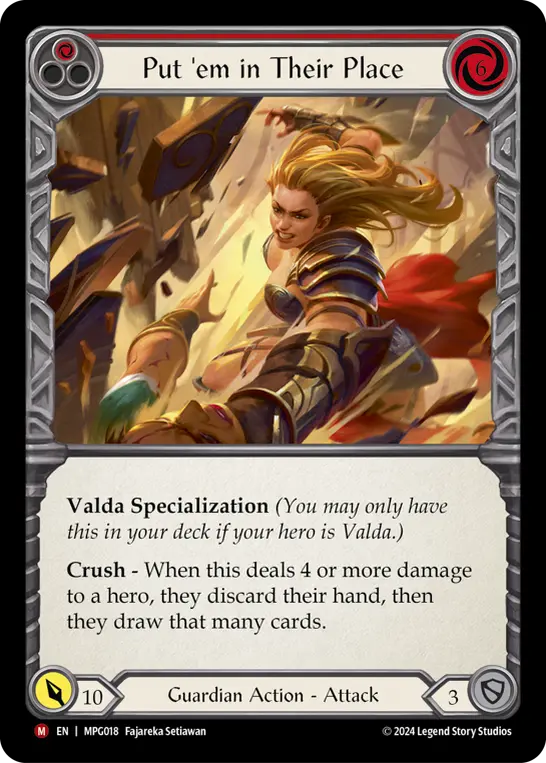 .
.
Deck damage via weapons
If you attack your opponent with Sledge of Anvilheim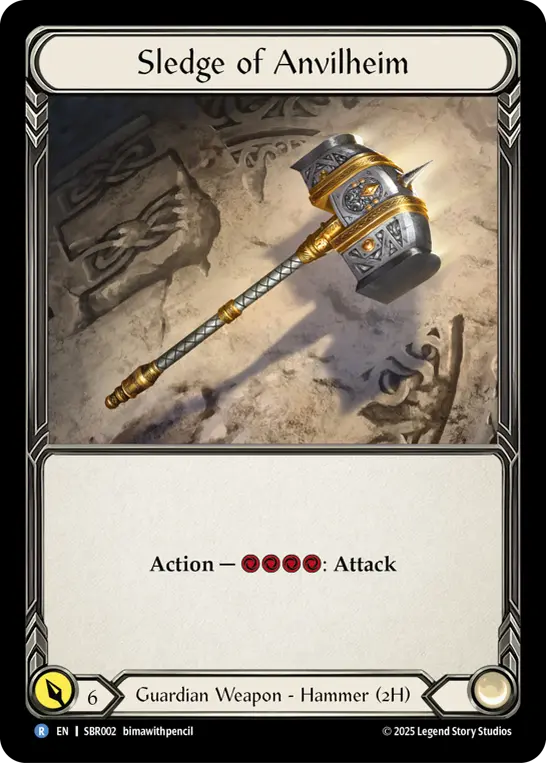 and they defend with two cards, you have spent no cards and they have spent two.
Self-inflicted deck damage
If your opponent plays a Zero to Sixty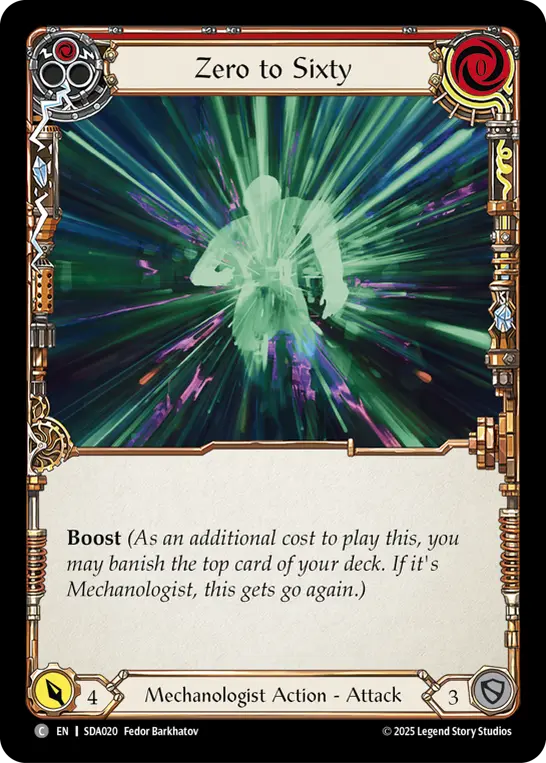 , choosing to boost a card from the deck, even if you defend with one card, they have spent two, so you come out ahead.
Deck damage via defensive cards
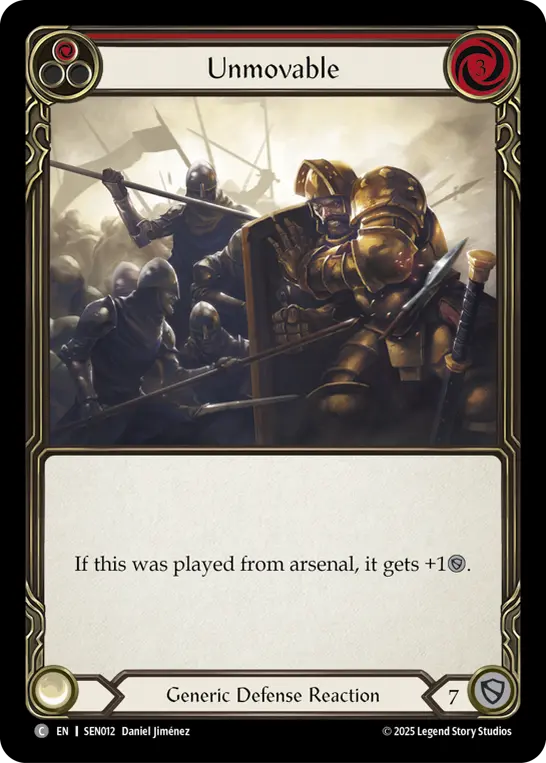
Defending with a card sends it to the graveyard, but defensive cards that cost resources can still inflict deck damage. If your opponent plays Call in the Big Guns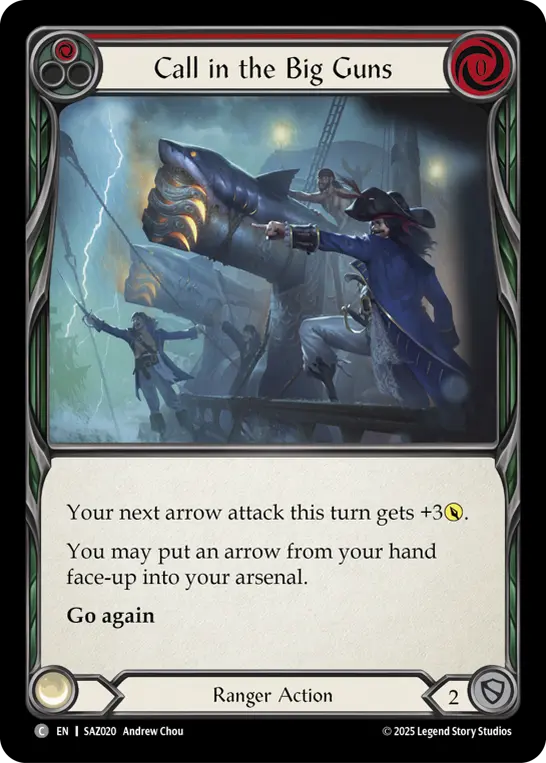 and Bolt’n Shot
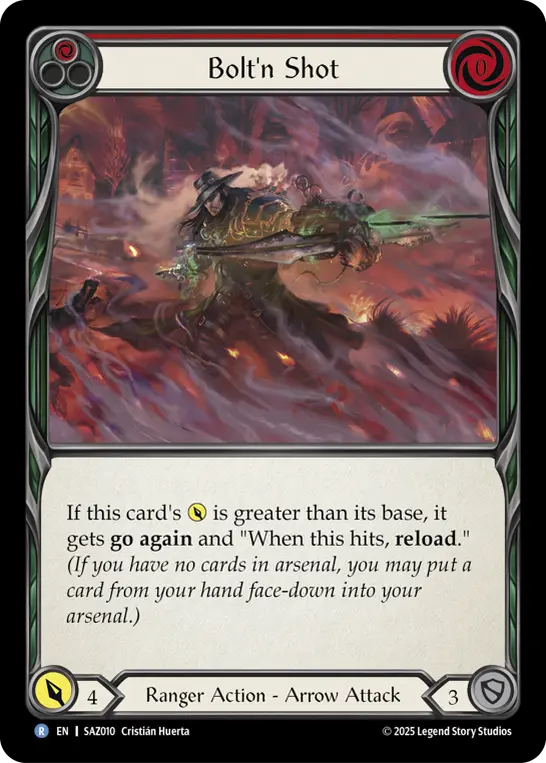 you can defend it with Unmovable
 and inflict deck damage, since they spent two cards to your one card. Note that if they instead play Look Tuff
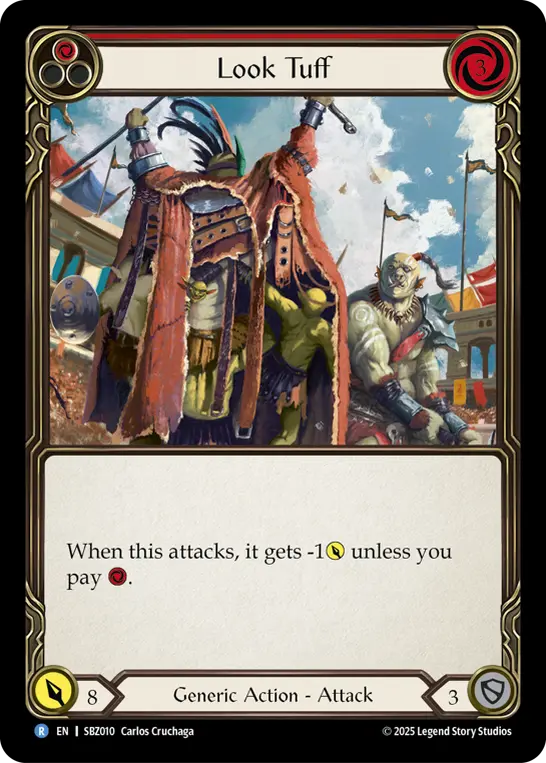 , it’s a tie.
There are even some defensive cards that stay in the arena, so that you can keep using them over and over again. Examples of this are Rampart of the Ram’s Head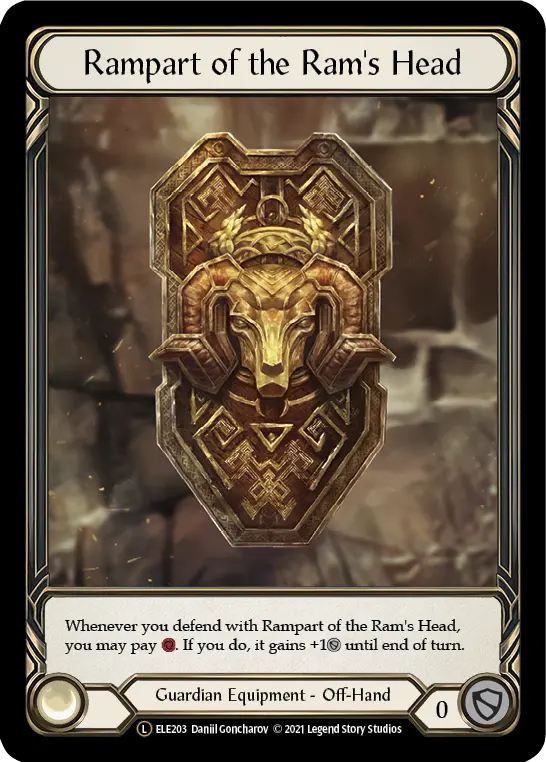 , Nullrune Boots
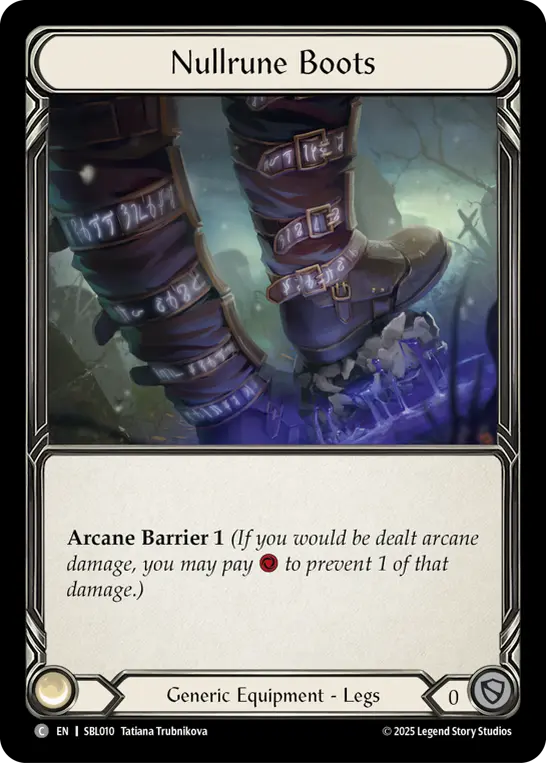 and Oldhim
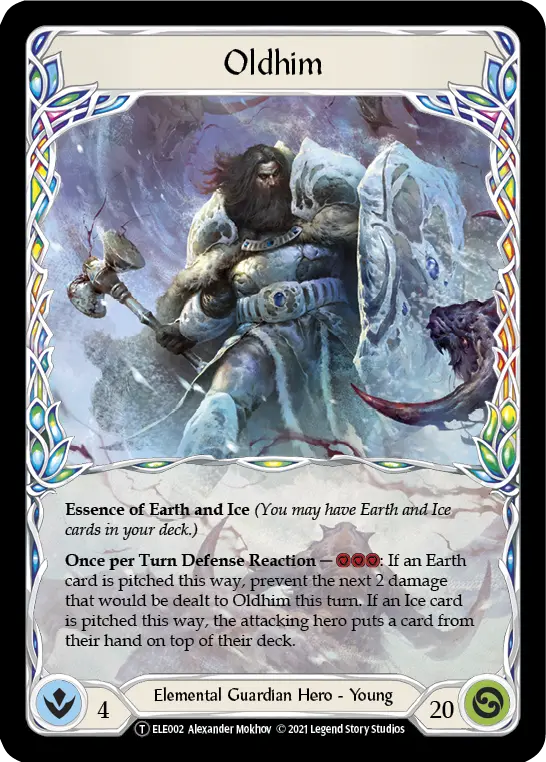 .
.
Fat decking
Fat decking means putting more than the minimum required number of cards in your deck. If the game plays out perfectly evenly, the larger deck wins. This is not allowed in every format, but can be a tool to make it easier to ensure that you end up with more cards than your opponent, especially when you are up against another Guardian or other hero that seeks to win by fatigue.
Traditional value math need not apply
When employing a fatigue strategy, try to avoid thinking about traditional value math too much. If your opponent is attacking for 2 damage with their last card in hand, it may be tempting to take the 2 damage and attack them with your hammer for 4 since that gives you better value. But their life total is not your measure of success when you are striving for fatigue. Your attacks should be disruptive, not pure damage.