How to play Guardian
Table of Contents
So, you wish to play Guardian? Welcome, friend! Guardian is a very rewarding class to learn, since it teaches you a lot of important fundamental skills in Flesh and Blood. It is also a very safe class to buy cards for, since there are so many of them. Living Legend isn’t going to take away your ability to play your cards. Guardian class specialists are usually here for the long haul.
What are Guardians like?
The Guardian class has a few defining characteristics. Let’s briefly go over them.
Attacks
Our attacks have a lot of power (referred to as “tall”), do not have go again and nearly all of them cost 3 or more resources. Most of them have some kind of effect that disrupts our opponent when they deal damage, but instead of having “on hit” effects, the keyword crush makes it so that their effects only happen if 4 or more damage is dealt.
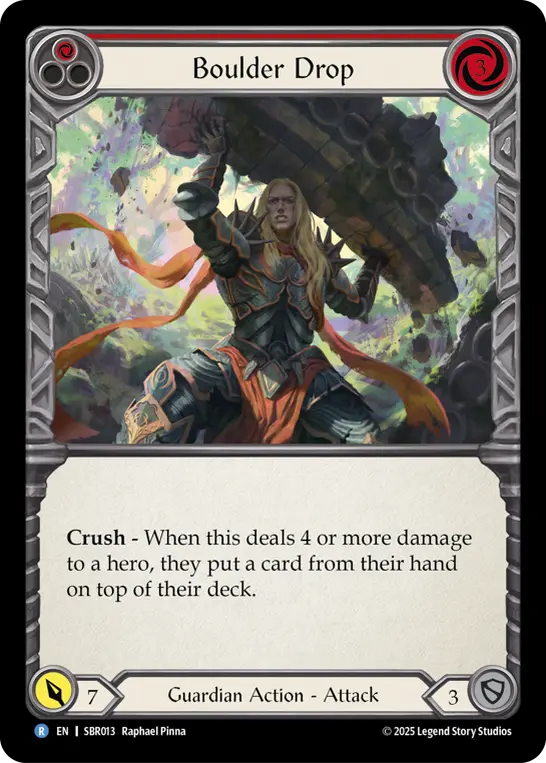
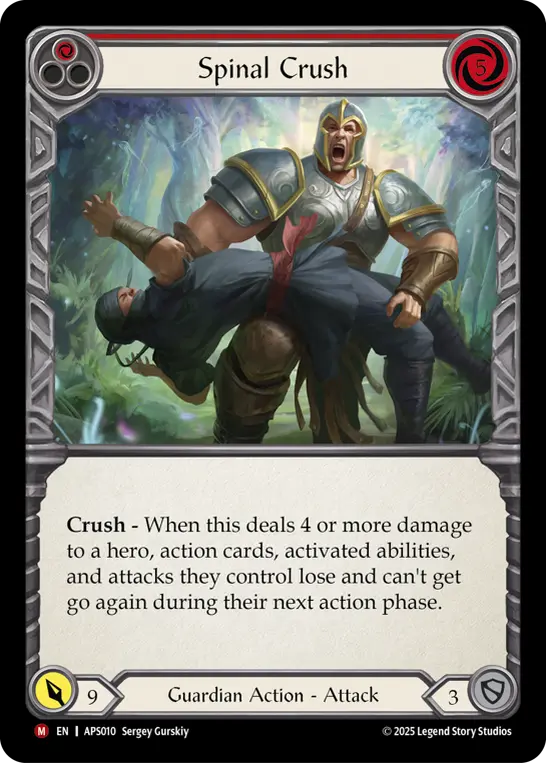
Lacking go again means that it is harder to use all our cards (“convert our hand”), and once we play our attack, our opponent has perfect information about what is going on since we (usually) don’t have the option to play any more cards that turn.
Crush is of course simply a worse type of on hit effect, making it easier for out opponent to stop the effect.
In Flesh and Blood, a 0 cost 4 power attack and a 3 cost 7 power attack ostensibly have the same value. Each additional resource cost adds one point of damage. The problem with taking this at face value is that playing multiple cheap cards instead of one expensive card is more flexible, less predictable and ends up with a higher damage output.
However, there is one metric where our attacks reign supreme; we deal lots of damage per card removed from the deck, since the pitched cards go back to the bottom of the deck. More on this later.
Auras
Besides attacks, the other main type of in-class cards are Auras. They come in many shapes and sizes, some defensive, some aggressive. The idea behind many of our Auras is that you play an aura one turn (“setup”), and on the next turn you play a devastating attack (“payoff”).
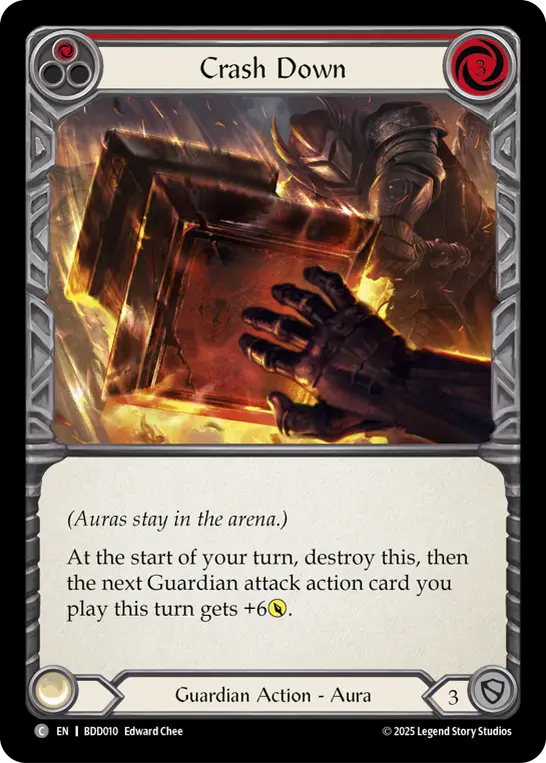
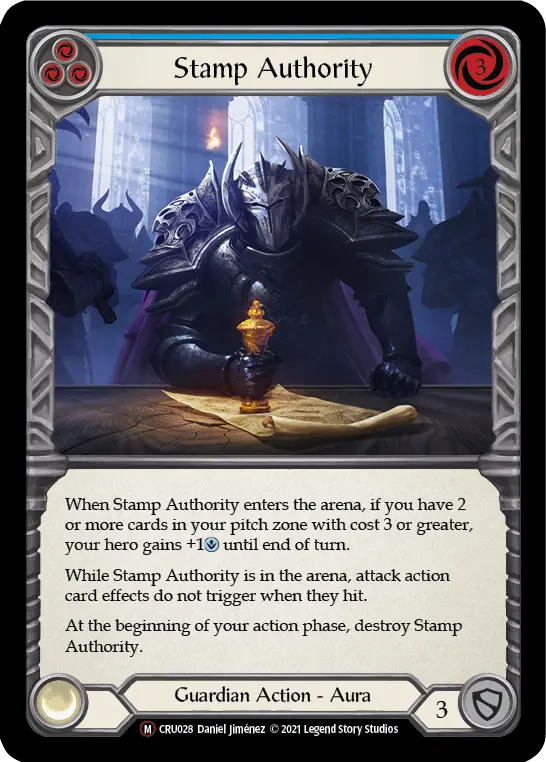
While the payoff from these auras can be quite devastating, it can be risky to spend a turn setting up an aura during which you present no damage or disruption. This gives your opponent the freedom to keep a full hand of cards with which they may be able to attack you for way more damage than your aura + payoff attack would deal. It is quite common to have some blue auras in a deck, since they can be used for pitching and blocking first and foremost, but if you have the space to make use of them they can help you out.
Non-attack actions
Non-attack, non-aura actions are the Guadians cards that most often have go again. These are of course useful for converting hands, but some actions have very unique effects that cannot be found elsewhere, so it’s a good idea to keep an eye out for these when deckbuilding.
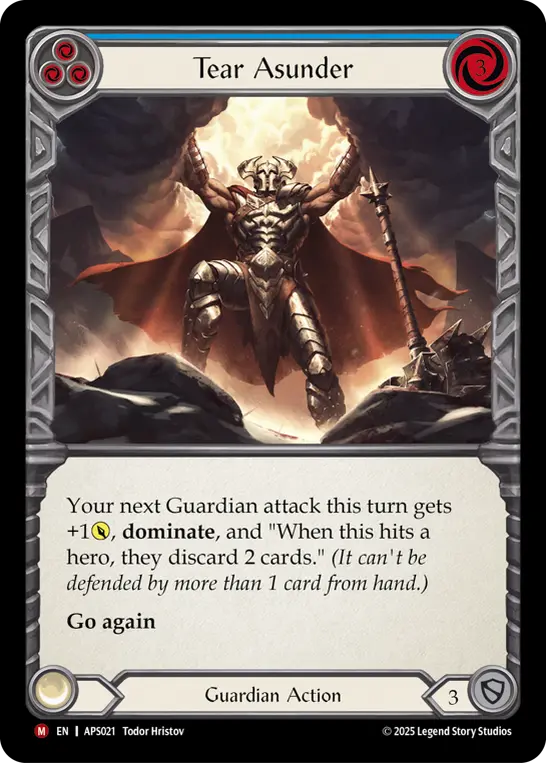
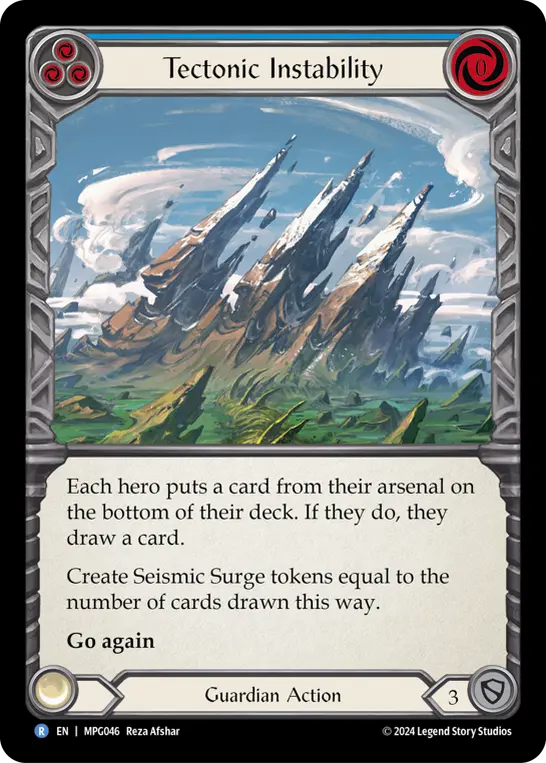
Tear Asunder is an all-star blue for Guardians, possibly featuring the most powerful non-crush on-hit effect on any Guardian card. Since it’s a blue that blocks for 3 and turns on Titan’s Fist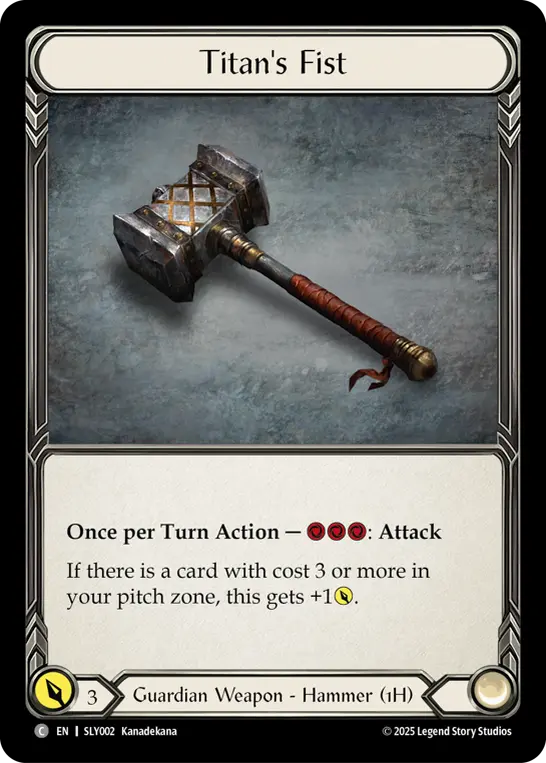 and Anothos
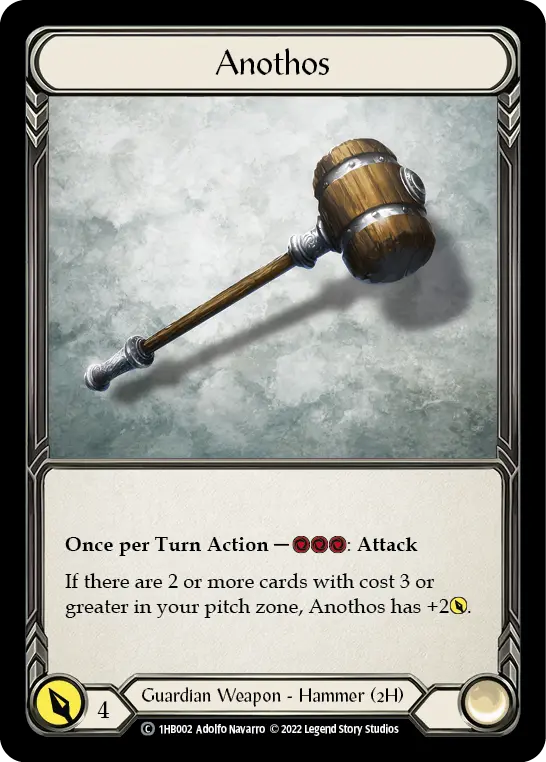 , it’s nearly always included in Guardian decks.
Non-attack actions do have a deckbuilding cost, since we often like having a high density of attacks for the purposes of clashing or playing cards like Zealous Belting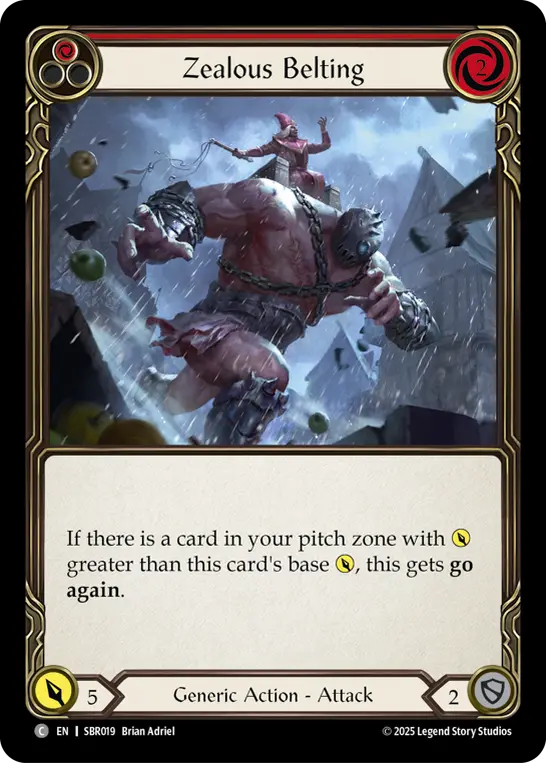 and Rouse the Ancients
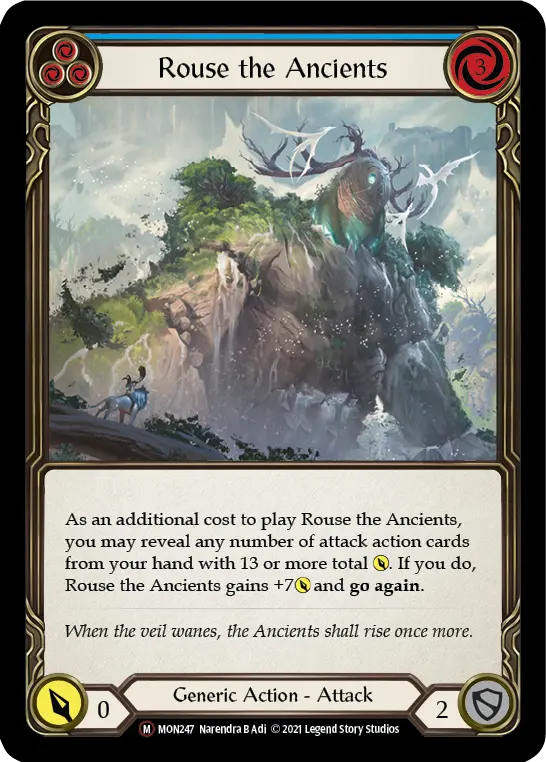 .
.
Weapons
Guardian weapons typically cost 3 or 4 resources to attack with, and have 4 or more power. Our weapons are fairly straightforward and interchangeable. Other classes may have weapons that are very specific to a specific hero, but Guardians are quite free to mix and match weapons, often bringing a one-handed weapon and a two-handed weapon to have some options for different opponents.
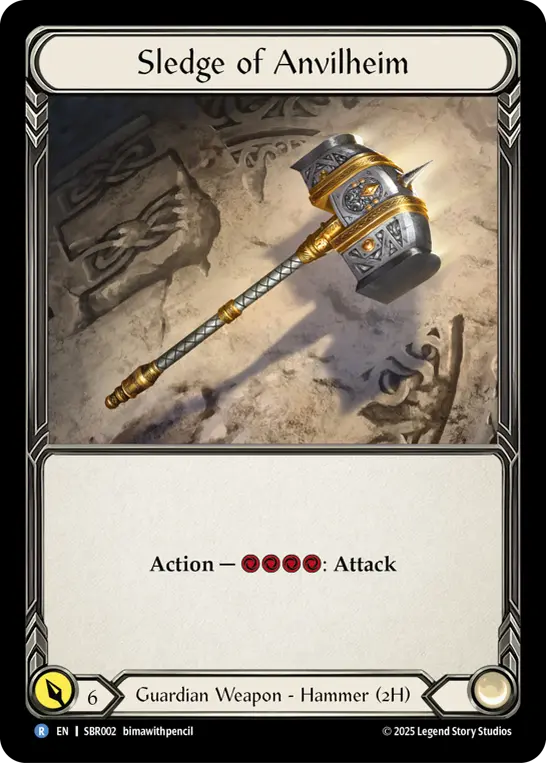
A simple observation is that a Guardian would normally not want to play a card like Wounding Blow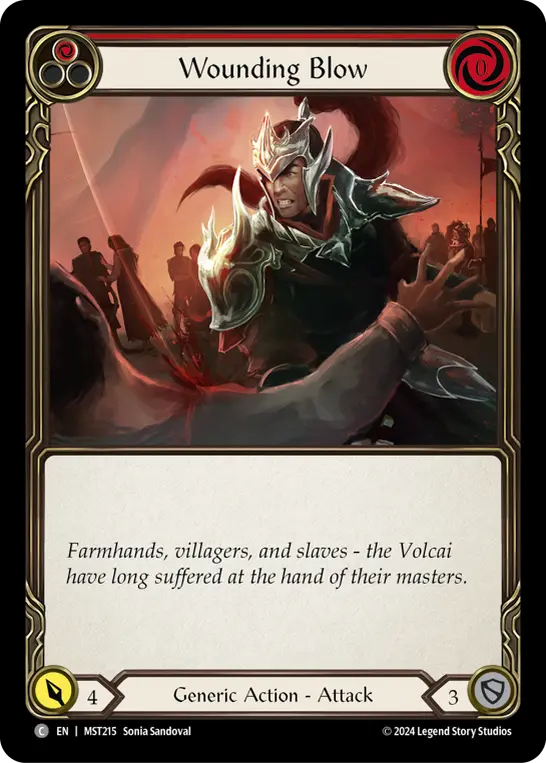 , since we attack for the same amount damage by simply pitching a blue. We also need blue cards to pay for our expensive cards anyway, so you will typically see that Guardians have far more blue cards in the deck than other classes, sometimes approaching 40 blues.
Equipment
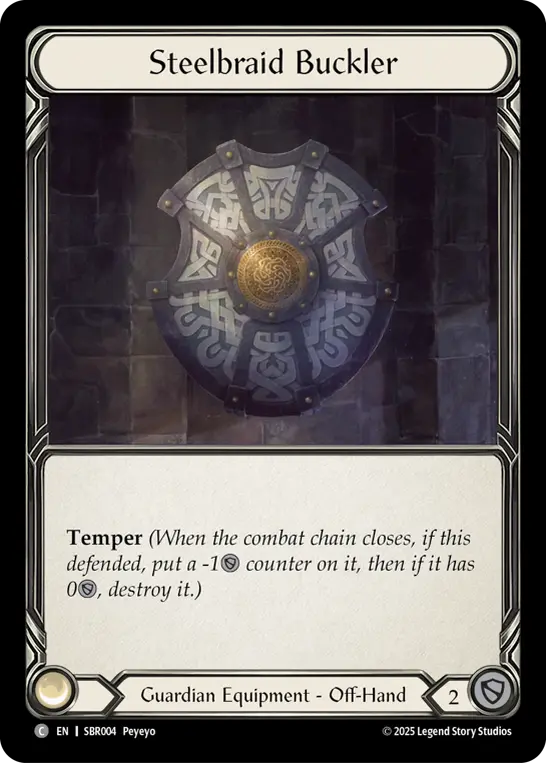
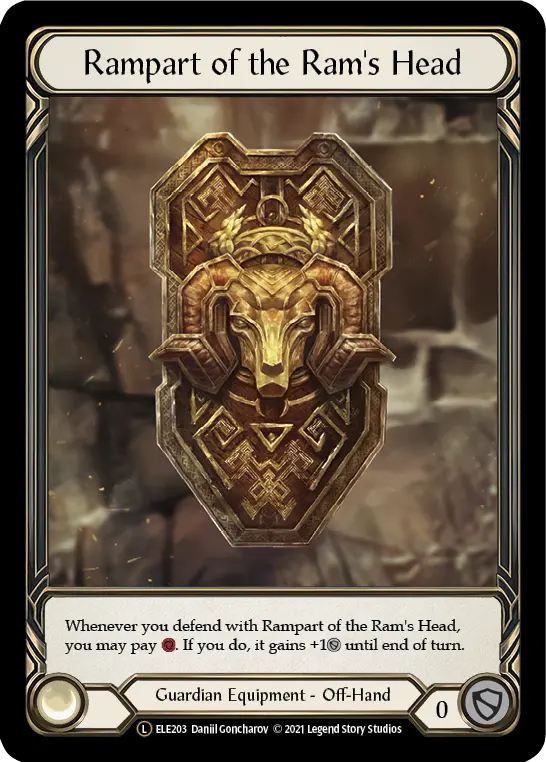
Like Warriors, Runeblades and Brutes, Guardians have access to armor pieces that can defend a lot of damage (colloquially known as a “fridge”). However, we stand out from other classes by having access to several defensive Off-Hand equipment which are generally depicted and referred to as shields (“Shield” is not a technical term in the game). Our Equipment is useful for stopping enemy breakpoints and blunting our opponents’ assault so that we can keep enough cards to play our epic haymaker attacks.
Heroes
For more details about each individual hero, take look at the guardians section. Let’s look at a few examples.
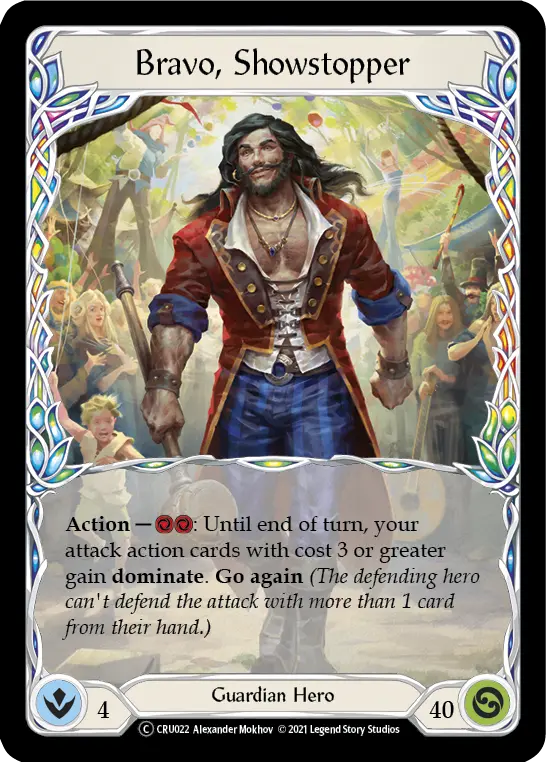
Bravo, the very first Guardian introduced in Welcome to Rathe, has a hero ability that makes it harder for the opponent to defend his attacks. Effects like these are referred to as “evasion”. Several Guardian heroes follow in this design tradition, with abilities that enhance their attacks to make them evasive or otherwise harder to deal with. Looks can be deceiving, though, as the Guardian card pool makes it quite challenging to put together a strong aggressive deck.
It is probably unwise to play in such a way that you get to use Bravo’s hero ability as much as possible. In contrast with many other classes, Guardians like Bravo grant you a lot of freedom to pursue whichever gameplan you want. The hero card doesn’t really force you to do anything in particular.
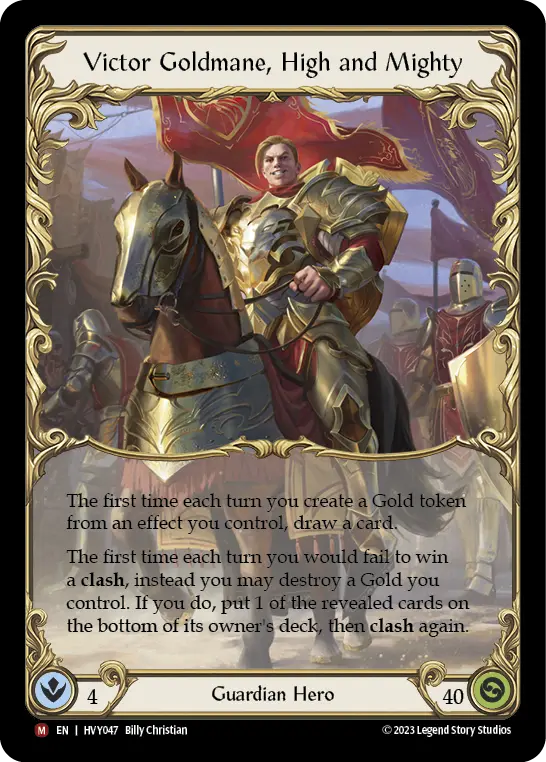
Victor, however, has an ability that is quite defensive in nature, since clash is most commonly found on defensive cards. This hero benefits greatly from clash effects and gold generating effects, and is therefore quite a bit more “siloed”. Playing clash cards is usually quite beneficial for Guardians, so is playing defensively, so this hero ability is probably something you do want to use as much as possible.
Guardian strategy archetypes
For Guardians, the recipe for success is employing the right strategy. While many particulars are quite hero and matchup specific, there are some traits a strategy can have that are worth thinking about as you sit down to play a game. These are not mutually exclusive, discrete strategies, but rather tendencies in how a game can be played out. You can also pivot form one playstyle to another as the game plays out, for example when you learn new information, the life totals end up a certain way, or you reach the second cycle.
Defensive
Being defensive usually means that we want to take it slow in order reach a game state where we are favoured to win. Taking a defensive stance is often considered a default for Guardians, since we can struggle to apply sufficient pressure in the early game to make an impact, and most opponents cannot rival our late game. Our hammers and attacks are efficient tools for winning via fatigue, and a good pitch stack can make our disruptive haymakers truly shine. Cards like Macho Grande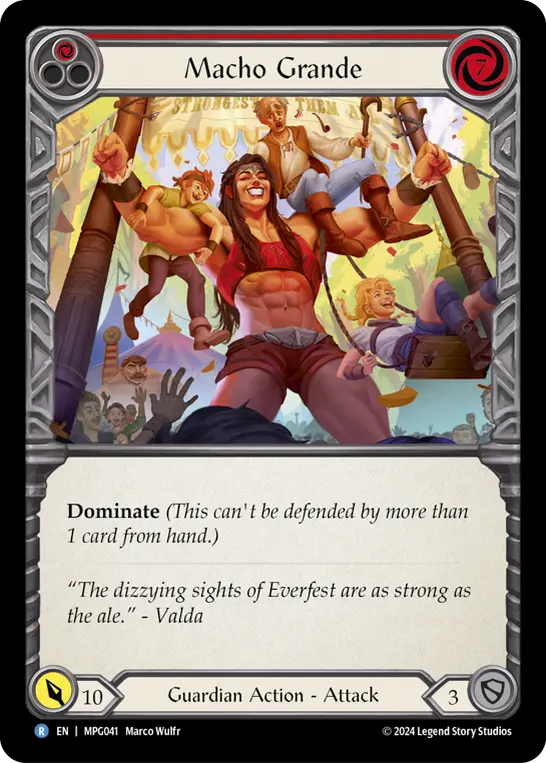 and Tear Asunder can give us the evasion we need to close the game when life totals are low.
Going all-in on defense can be a path to victory against decks that self-inflict deck damage and completely fizzle out in the second cycle. Historically, pure defense has also been a successful formula thanks to hyper-efficient defensive tools such as Count Your Blessings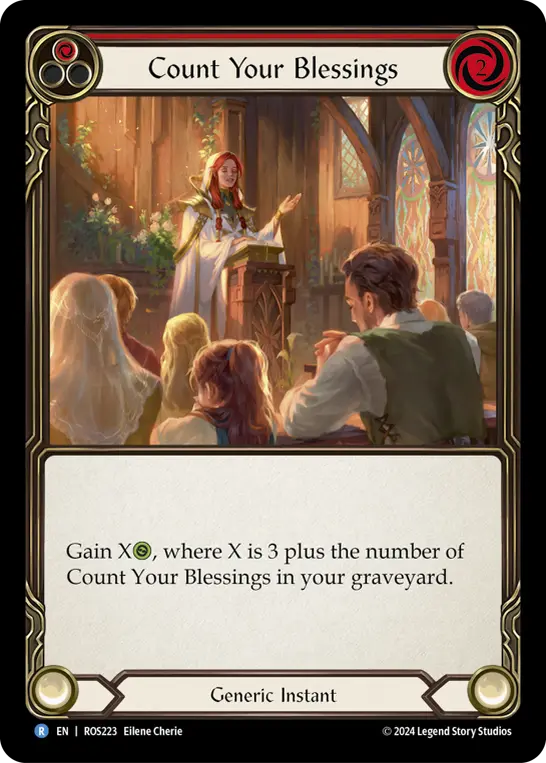 or Oldhim
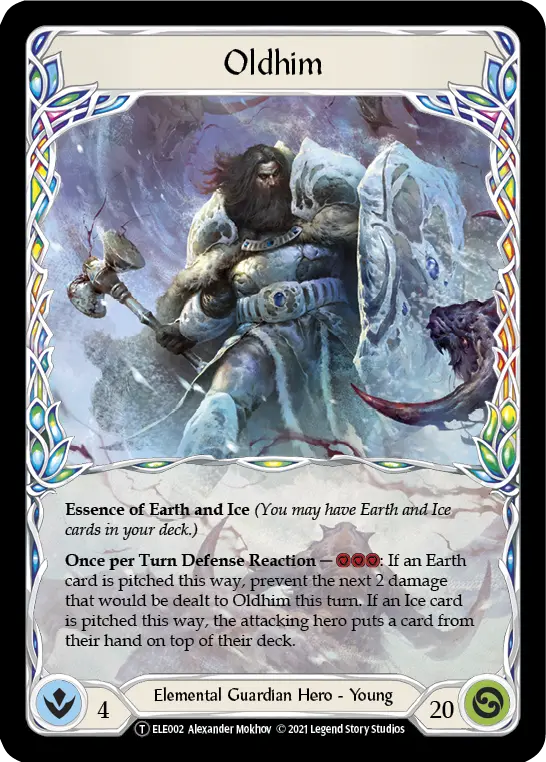 , but the game has largely moved away from such cards since they create very lengthy games.
The main counters to a defensive strategy are combo, board state or special late-game value engines. Sending absurd amounts of damage in a single turn with a combo can overcome even the best defense, and board state heroes can build up to become an unstoppable engine when we lack the aggressive tools to stop it.
Aggressive
An aggressive Guardian seeks to apply pressure to the opponent to threaten their life total. Most Guardians do not excel at aggression since we struggle to output as much damage as other classes, but with the right build and the right matchup it can be important and correct to be aggressive. It is especially important to be aggressive when your opponent has a nigh unstoppable late game combo or engine. Perhaps they have access to a weapon that is more efficient than your hammer?
A Guardian in an aggressive stance will usually want to bring disruption to the table. Our cards are simply not built for just raw damage.
Aggressive Guardians also benefit from generic attack action cards with go again, such as Enlightened Strike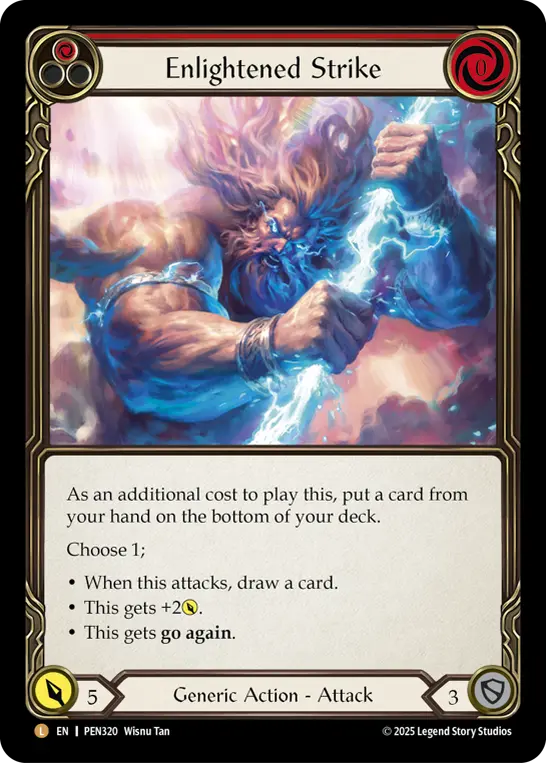 , [[Zelous Belting]] and Rouse the Ancients, and other cards that don’t consume our action point such as Edge of their Seats
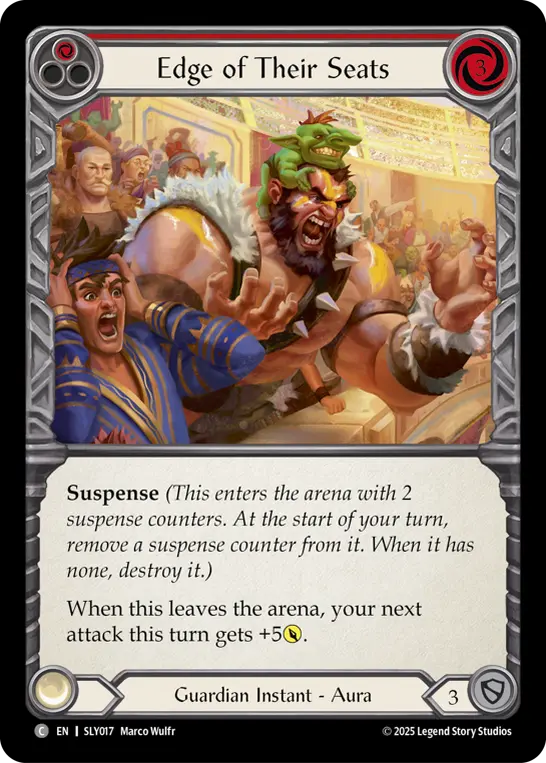 , Sprout Strength
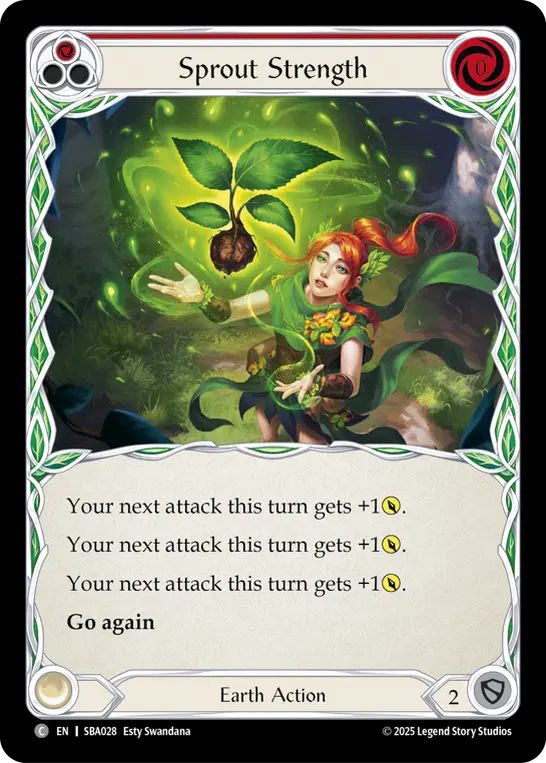 and Pummel
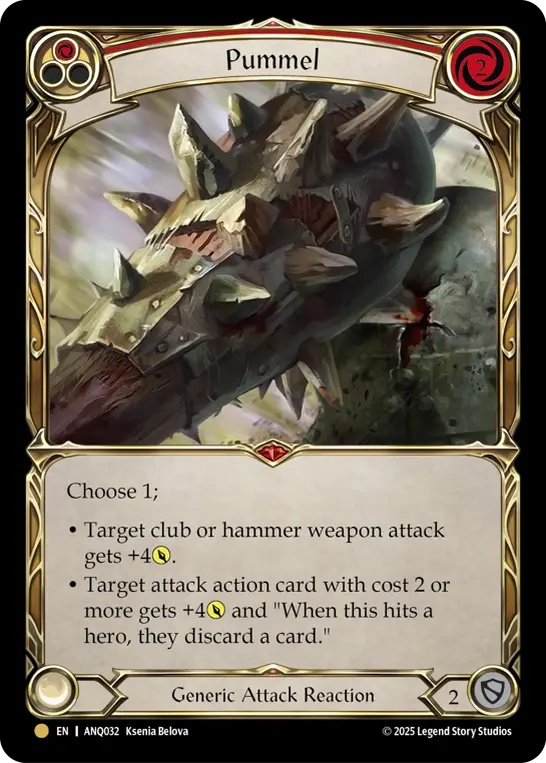 .
.
Aggressive Guardians are perhaps most weak to aggro and midrange decks that have better numbers. Classes with access to strong armor such as Warriors, Runeblades and Brutes can often fall into this category since they have good numbers and are also able to avoid our crush effects.
Disruptive
Being disruptive is not so much a strategy archetype as it is a concept we can utilise to serve our goals. At its core, disruptive effects force your opponent to adjust, for example by forcing them to defend, discarding their cards and play with a smaller hand, or applying special effects that prevent them from playing their cards how they would like.
Disruption is not a golden ticket, since it can be costly to keep cards to send disruption, and the reward may not be so great. Disruption can fall flat against midrange decks. They are often happy to stop the disruption with defense reactions or armor and follow up with powerful 2-card plays.
Aggressive disruption
When you are the aggressor, disruptive tempo can be a path to ending the game early, or at least put you in such a good position both in terms of life totals and cards in deck that you should be able to nudge your way to victory in the end.
Going all-in on disruption to achieve disruptive tempo relies on having a critical mass of useful disruption effects. This is not necessarily always so easy to achieve, since some of our crush effects do very little into certain matchups and heroes. Chokeslam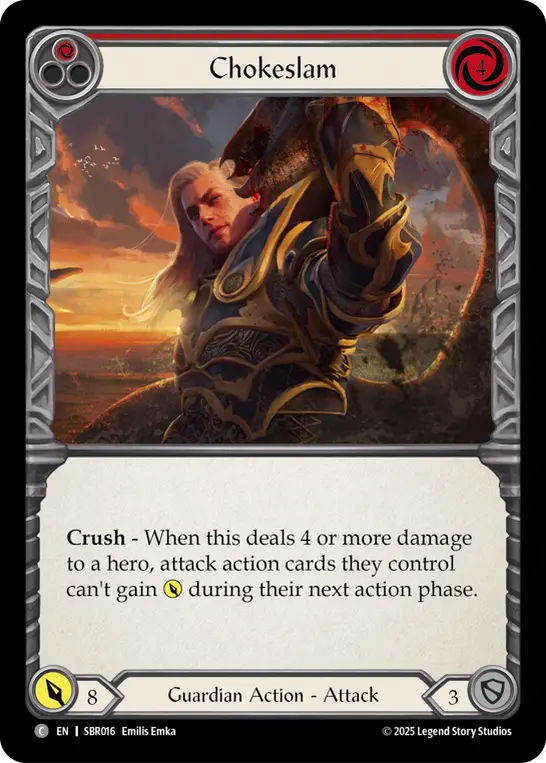 is great against Rangers, but useless against Warriors, and Crush the Weak
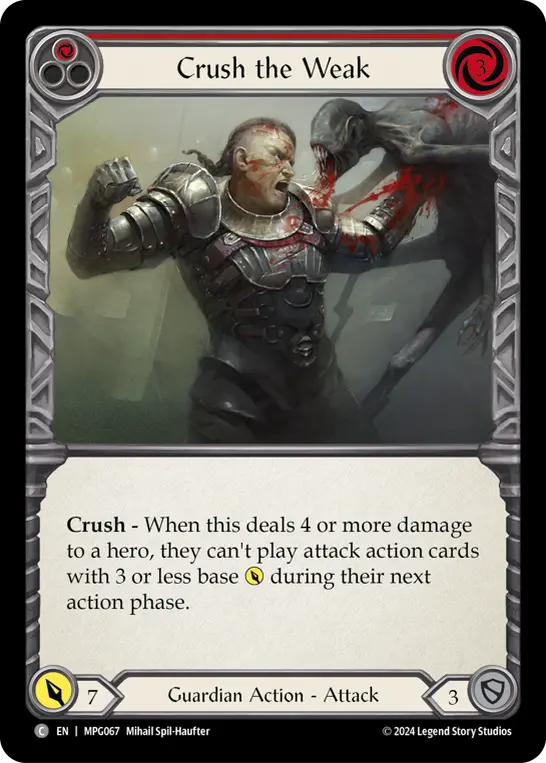 is great against Ninjas, but useless against Brutes, for example.
Keep in mind that you can manipulate the density of disruption effects through pitch stacking, so aggressive disruption can be the “phase two” of a defensive pitch stacking strategy.
Defensive disruption
When you are playing defensively, disruption can be a critical tool for sabotaging your opponents’ power plays.
Utilising disruption defensively is all about timing. When the opponent takes a setup turn, a great response is to take the opportunity to send a disruptive card such as Command and Conquer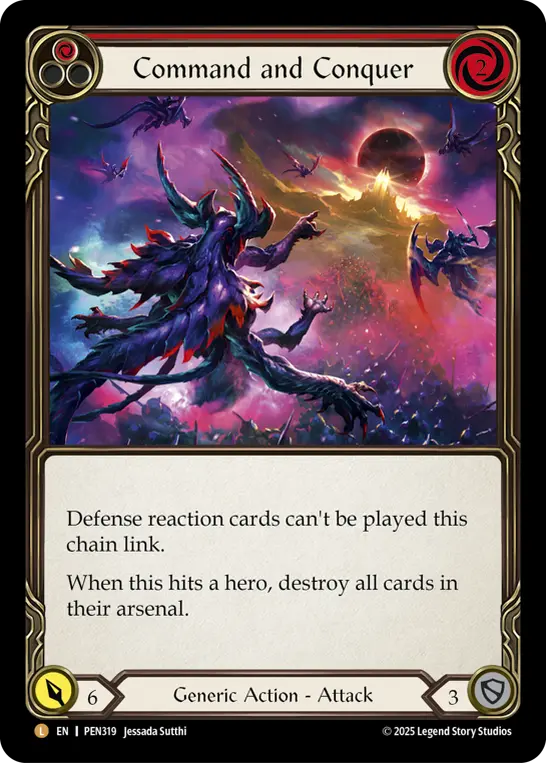 , Felling of the Crown
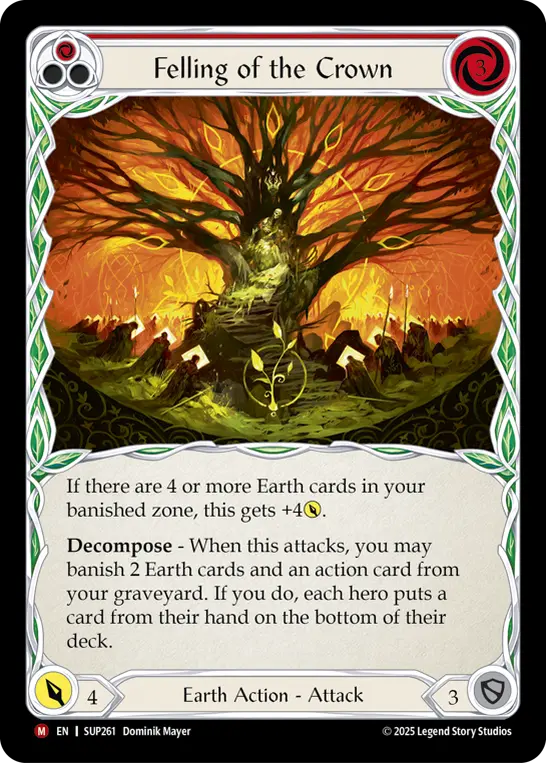 , Plow Under
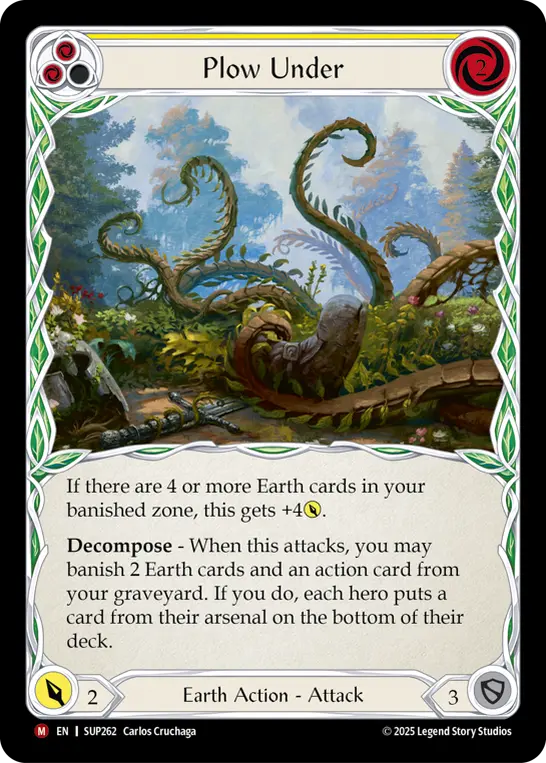 or a crush card that is particularly impactful against the opponent.
It can often be a good idea to arsenal your most efficient disruption card so that you are ready to disrupt when the situation calls for it. Try to read your opponent so that you know when your disruption will hurt the most.
Board state
Board state refers to a gameplan that seeks to establish permanents in the arena, keep them alive and accrue value over time from them. The quintessential examples of heroes doing this are Illusionists, who play auras and/or allies that stay on the board until the opponent can destroy them. Board state has a lot of snowball potential against heroes that struggle to keep up. Guardians are not really well known for being able to employ such a strategy, but Pleiades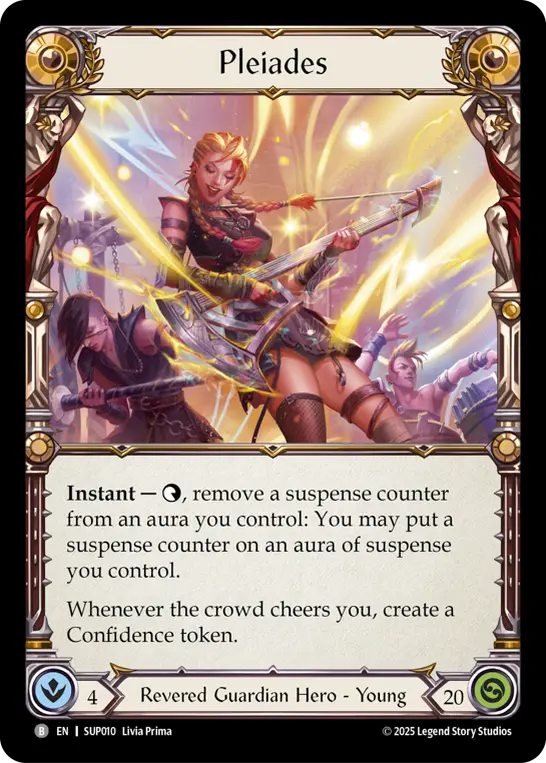 can keep To Be Continued…
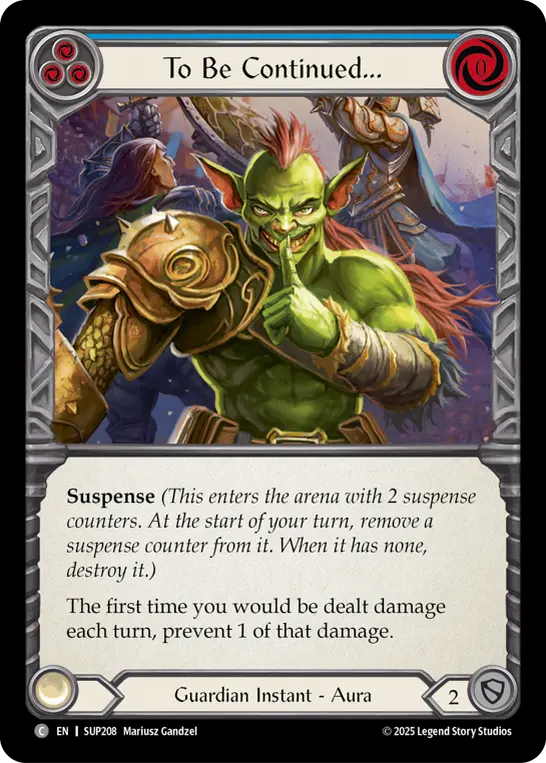 , What Happens Next?
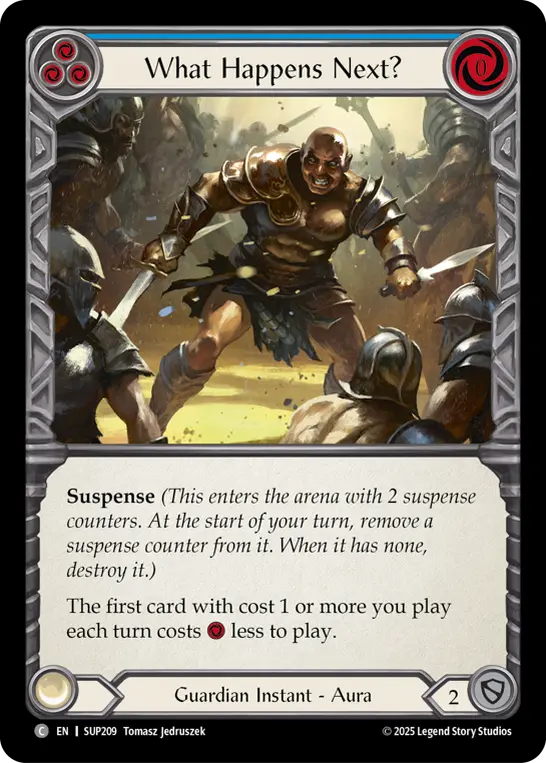 or The Suspense is Killing me
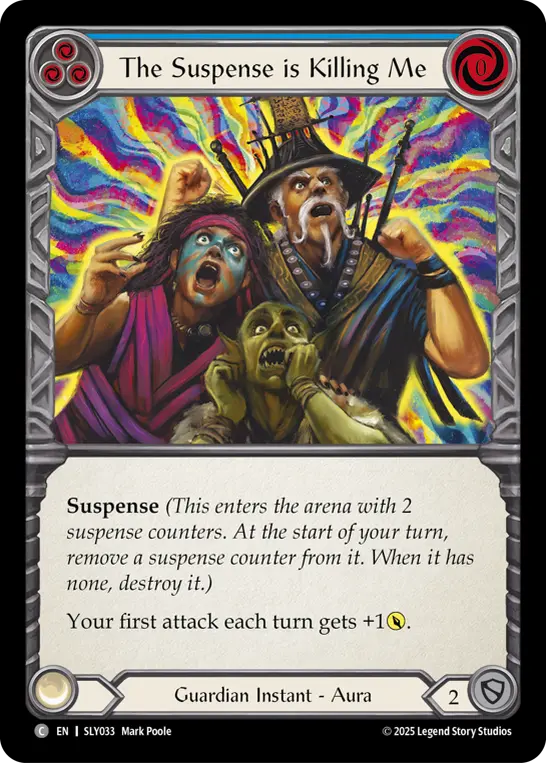 on the board indefinitely so long as you have a steady supply of suspense counters.
Ley Line of the Old Ones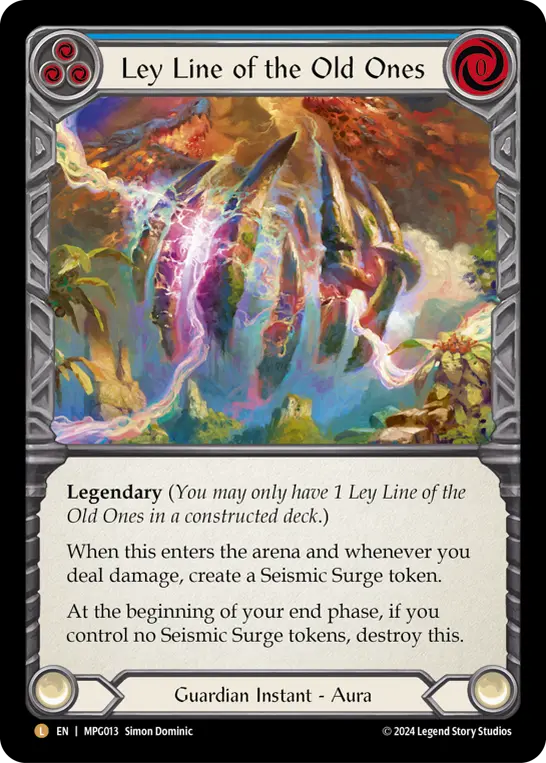 and Nerves of Steel
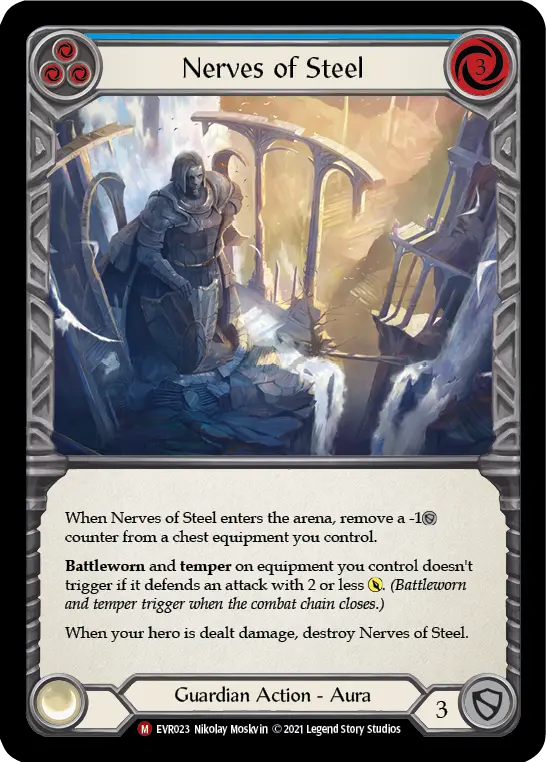 are other “stay in play” auras available to the Guardian class.
Midrange
Midrange is all about the numbers. A midrange strategy recognises that even though attacking usually presents higher numbers on paper, an efficient defense is a good way to prevent our opponent from getting their maximum value, for example by stopping their on hit effects.
Guardians can often find themselves in a midrange position since pure defense can fall short against several opponents, and pure offense is not a reliable nor particularly efficient way to play Guardian.
One problem for Guardians in a midrange mindset is that our crush cards can be quite hard to get any value out of, especially when we are facing up against another midrange deck. If we play our crush cards out as we see them, our opponent may very well be holding a defense reaction in arsenal to avoid the crush effect.
Combo
Coming soon.